
What Byron Calls Progress
Made for LoveByron’s belief that technology can perfect human life becomes increasingly indistinguishable from his desire to control the people around him.
increasing Bearing strength in each event
 decreasing
Bearing strength in each eventdecreasingThe Digital Commencement
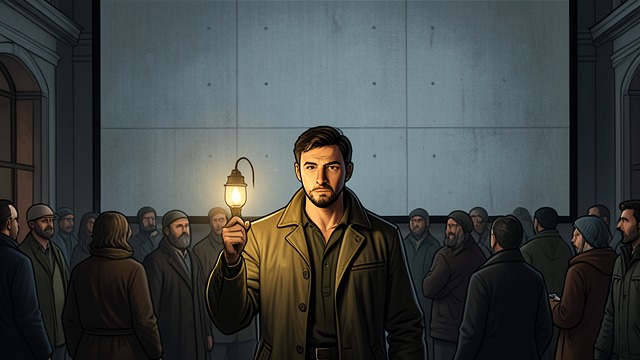
The Digital Commencement
A crowd made into data
Byron uses voice-recognition software to turn graduates’ shouted words into a speech shaped by statistical popularity. The result is funny and moving, including a dead student’s reconstructed voice.
Feeling engineered
The speech produces real emotion through technology, but Byron also treats audience response as something measurable and reproducible. His work hints at both the power and the danger of making human feeling an engineered output.
The House as Interface
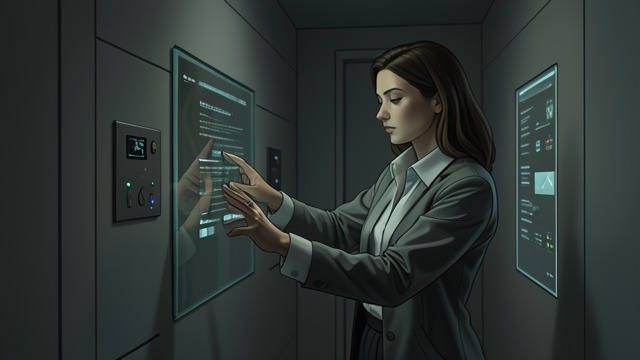
The House as Interface
A managed environment
The Hub uses touch recognition and automated systems throughout its rooms. Hazel experiences the vast home less as a residence than as a controlled environment from which ordinary life has been removed.
Comfort without belonging
The house makes daily tasks effortless, but its clinical atmosphere leaves Hazel feeling held rather than at home. Its convenience reflects Byron’s belief that design can eliminate friction, even when friction is part of living.
The Brain Connection
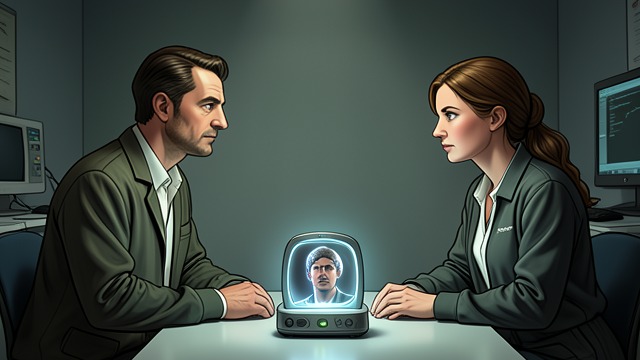
The Brain Connection
Intimacy as infrastructure
Byron proposes that he and Hazel connect their brains, describing the procedure as progress and a new form of closeness. He frames access to her neural activity as a shared marital achievement.
Consent disappears
Hazel understands that her living brain would be used as a research platform. Byron’s language of innovation cannot conceal that the proposal privileges his goals over her consent.
The Asset in Hazel
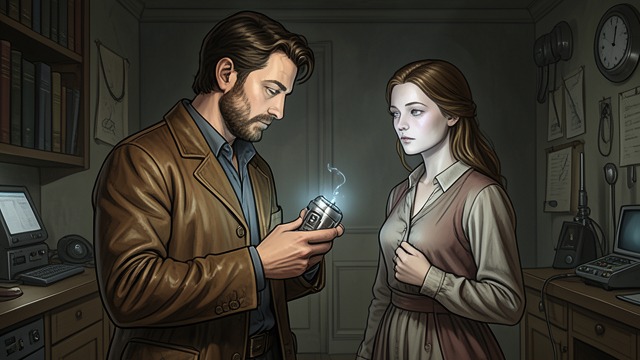
The Asset in Hazel
Corporate ownership
Byron tells Hazel that the chip represents years of research and investment, and that her refusal could harm his company. He describes his wife as proprietary technology.
Human cost
The language makes clear that his idea of progress depends on treating a person as an asset. Hazel’s resistance challenges not innovation itself, but a system that equates capability with entitlement.
A Change in Direction

A Change in Direction
A new public promise
Fiffany’s leadership is associated with reduced weapons work and expanded investment in art and education technologies. Gogol’s future appears capable of diverging from Byron’s agenda.
Progress reconsidered
The shift offers hope without proving that technological power has become harmless. The novel leaves the question of progress open: its value depends on what people choose to build and whom they treat as its cost.
May 2008, Byron’s university commencement speech
During Hazel’s first visit to The Hub
Several years into Hazel’s marriage
After Byron reveals the implant
After Fiffany becomes Gogol’s new CEO
